
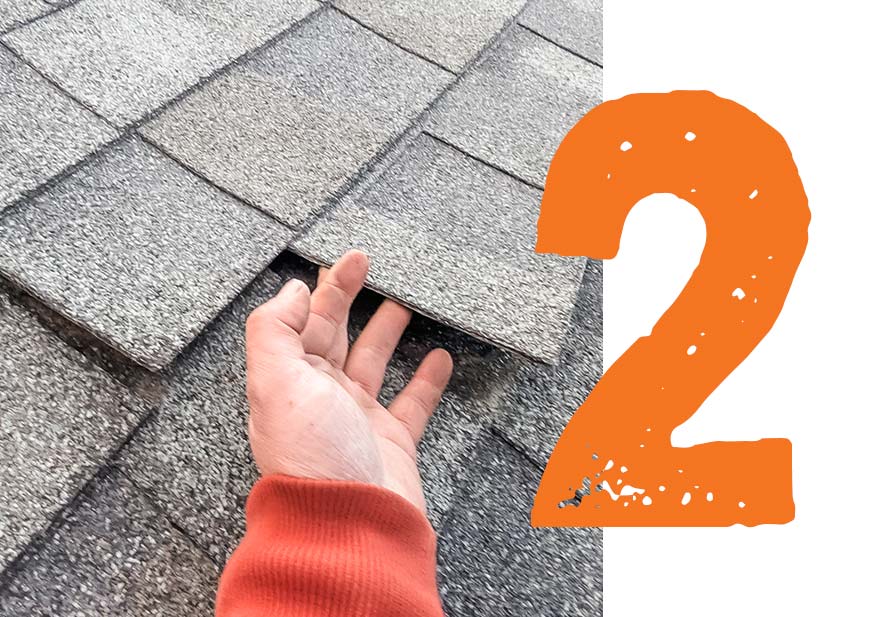
At Mountain Roofing, our core value is To Care. That means we don’t just look for missing shingles; we look for the integrity of your home’s defense. Often, the wind doesn’t blow shingles off—it simply breaks their thermal seal.
Think of it like unbuttoning your winter coat. You’re still wearing it, but it’s no longer keeping the cold out. Here is how you can inspect your home’s first line of defense after a Montana wind event.
Why Shingle Seals Fail in Southwest Montana
In our region, shingle seals are put to the ultimate test. There are two primary reasons we see seal failure on local roofs:
1. Cold-Weather Installation Issues
In Montana, we often have to roof in cold temperatures. However, asphalt shingles require solar heat (aka those UV rays) to “activate” their adhesive strip. If a roof was installed in the winter and didn’t get enough sun to bond, the shingles remain “loose,” leaving them vulnerable to the very first wind storm. Knowing how often the wind blows, those sealant strips often become coated with dust before they can activate. According to the National Roofing Contractors Association, this means the minimum temperature needs to be 40º and rising (while it is the minimum, it’s not ideal).
2. Age and Extreme Temperature Swings
The extreme temperature fluctuations in our valley causes shingles to expand and contract. Over time, the adhesive becomes brittle. Once the wind gets under a brittle shingle, the seal snaps, and the shingle begins to “chatter.”
Your 5-Point Post-Wind Damage
Roof Checklist
You can perform a preliminary check from the safety of the ground. Grab a pair of binoculars and look for these five warning signs:
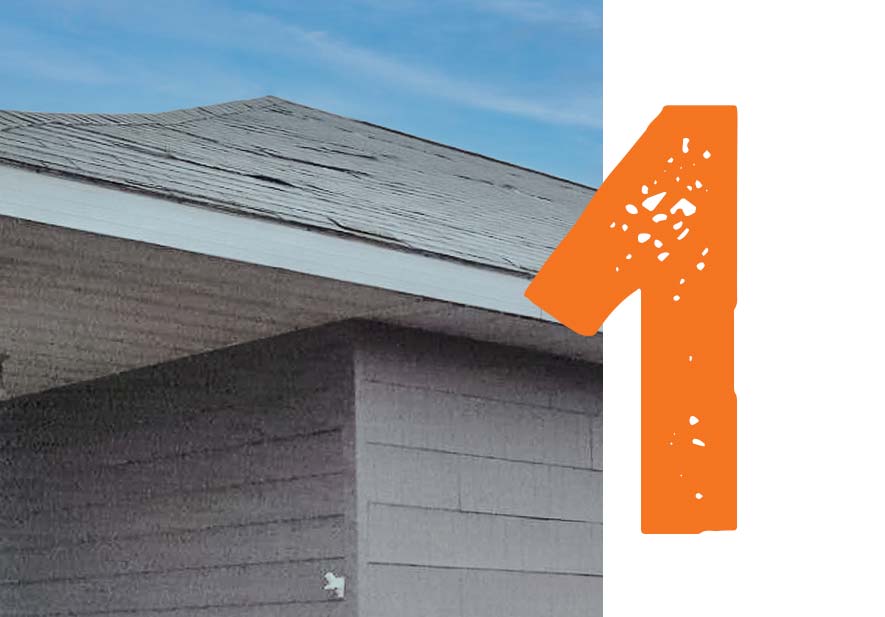
The “Shadow” Test
Look at the horizontal lines of your shingles during the morning or evening. Do you see small, dark shadows under the edges? This usually indicates a “lifted” shingle where the seal has failed.
Listen for the “Chatter”
On a breezy day, stand near your eaves. Can you hear a subtle “clapping” or “chattering” sound? That is the sound of loose shingles lifting and hitting the roof deck. It’s a tell-tale sign that your roof is no longer a single, bonded unit.
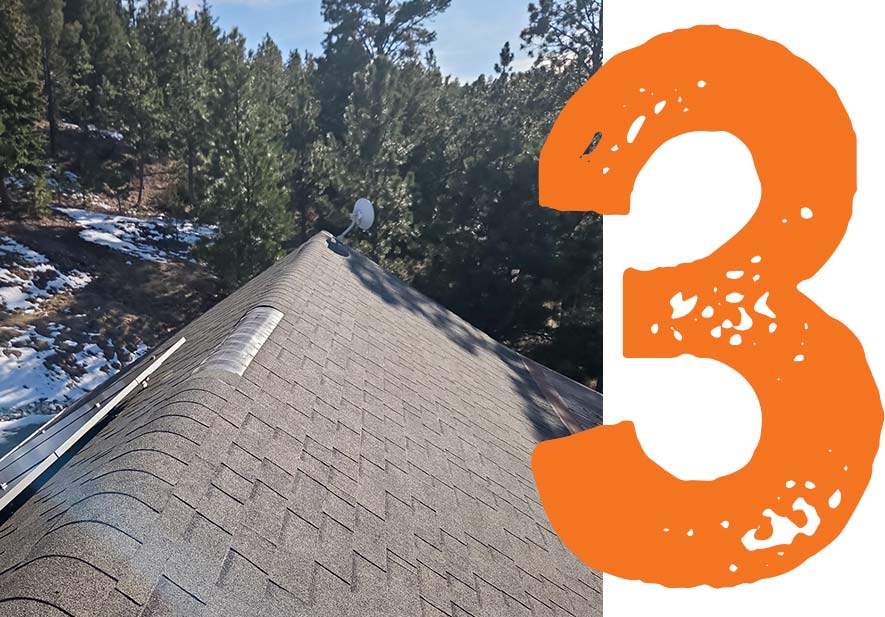
Check the “Ridge Caps”
The very peak of your roof takes the brunt of the wind. Check to see if the shingles at the peak look crooked or slightly shifted. If the ridge is compromised, moisture can easily drive underneath.
The Gutter Patrol
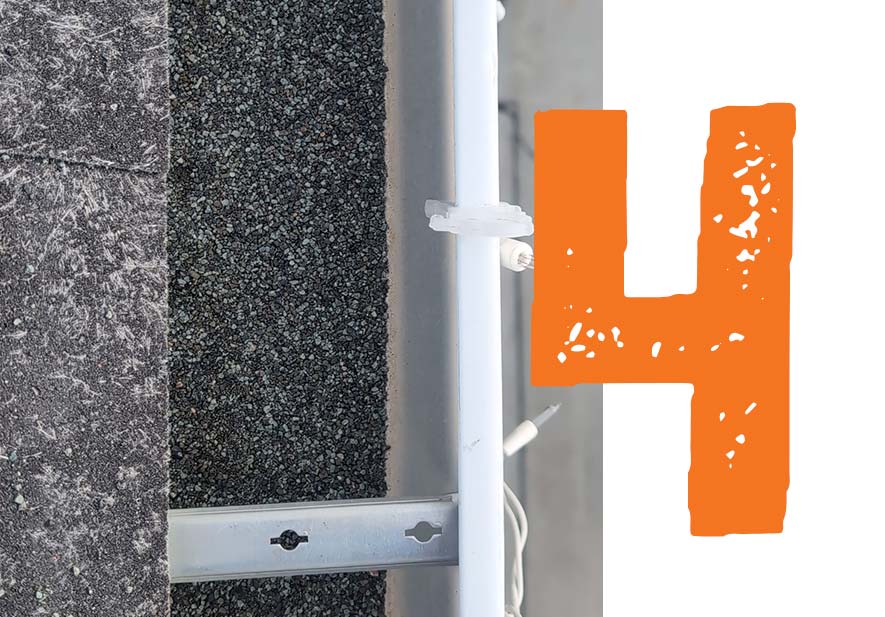
Check your downspouts. If you see an unusual amount of granules (the “sand” that coats shingles), it’s often a sign of friction. When seals fail, shingles rub against each other in the wind, shedding their protective coating.
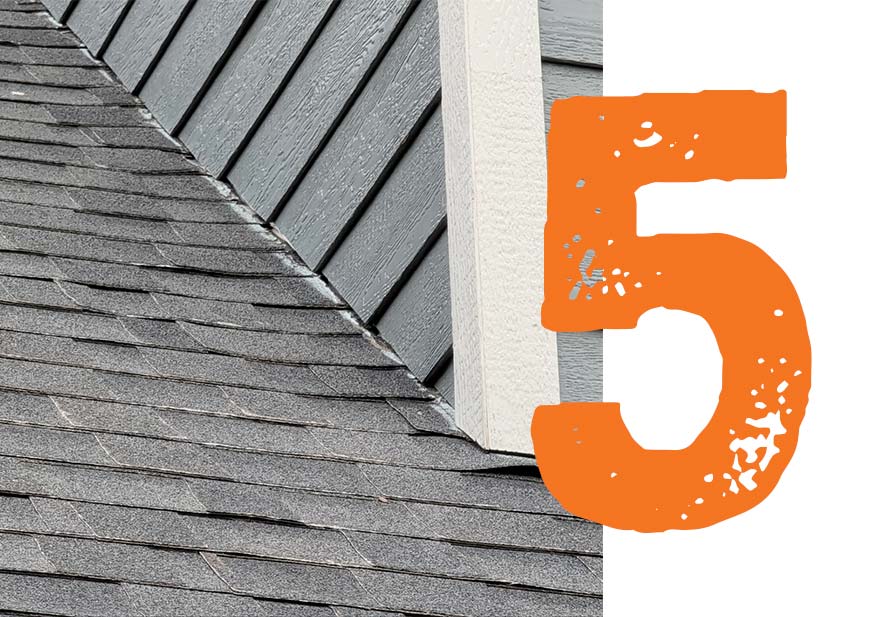
Inspect the Flashing
Check the areas around your chimney or vents. If shingles have shifted even slightly, the metal flashing underneath can become exposed, creating a direct path for leaks during the next snowmelt or rain storm.

Don’t Wait for a Leak to Find Out
A failed seal is an open invitation for water damage. Once the wind “unbuttons” your roof, rain and snow can find their way into your attic, often staying hidden until the damage is extensive and expensive.
Our Commitment to You:
We believe in proactive protection. If you suspect wind damage, we provide professional inspections complete with high-resolution photos. We’ll show you exactly what we see, so you can make an informed decision about your home’s health.